Showing posts with label book report. Show all posts

Tuesday, October 14, 2014

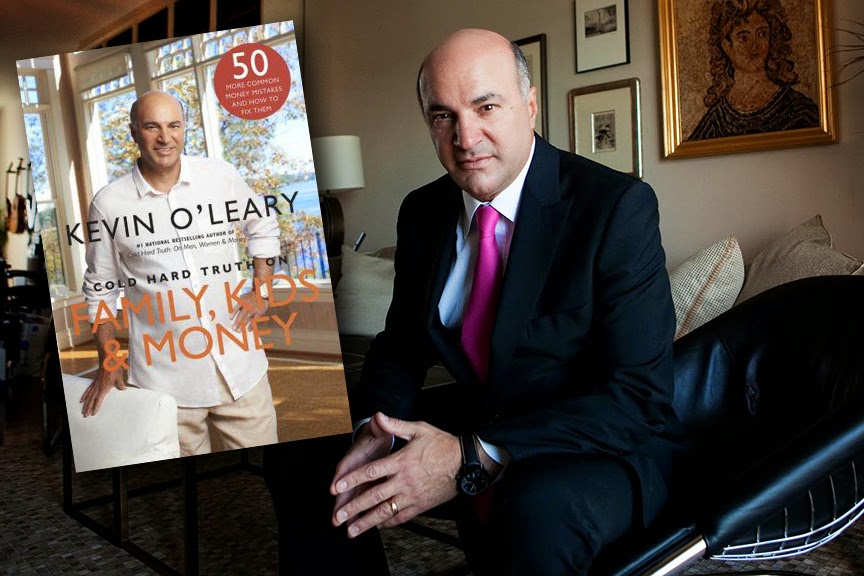
Cold Hard Truth On Family, Kids And Money by Kevin O'Leary pt. 4


Part Four: Family

Chapter 12: All in the Family

This chapter is about small businesses which I’m not really interested in. If you are, you can take the book out from the library.
____________________________

Chapter 13: Hope for the best, prepare for the worst

Make sure you have enough money saved up for retirement. There are a lot of huge costs when dealing with the later stages of life. From unexpected health crises to long-term care facilities things can add up quickly. You have to make sure you’re prepared monetarily.

Costs for long-term care facilities for seniors vary by province. B.C. is one of the less expensive places coming in at $16,243 per year. In Ontario it’s 25,550, which is a little bit above average across the country. O’Leary advocates buying long-term care insurance. I guess that depends on your particular situation.
____________________________

Four questions you need answered before the end (death)

1) Do you have a will? You need a will. Especially if you have dependents.

2) Create a file for your surviving family members. It should include all the steps to take before your will is probated, including tax assessments and a potential phone call to the bank. (If you have money in a joint account with your partner, you may need to notify the bank to make sure the account holder’s names are separate so that your money isn’t frozen in the event that one of you dies.)

Indicate where important documents can be found, such as property deeds, tax papers, insurance and medical claims. You’ll probably want to keep your birth certificate, passport, social insurance number and any other official, hard-to-replace documents in a separate place for safekeeping (like in a safety deposit box at the bank). To be extra safe scan each of these documents so you have digital copies as well.

Write down a list of people who should be notified of your death. People who will need an official copy of your death certificate. These include: the civil authorities in your province, your financial advisor, the lawyer who drew up your will, your pension fund providers, your health insurance, other insurance companies, your various credit card providers, the office that issued your driver’s license and your tax account (if someone else does your taxes). List their names and contact info (phone numbers and e-mail addresses).

If you own real estate, indicate the address and expected resale value of each property. This can help your beneficiaries decide whether to keep, sell or rent the property in question.

3) Have you made funeral arrangements?

4) Have you written down all of your e-mail and social media passwords? Write down the site name, login ID and password for every single site you use (and your computer itself). Bank websites, sites for auto and property insurance, Facebook, Twitter, and any kind of e-mail accounts.
____________________________

Chapter 14: Midlife Crises & Money Mismanagement

Pretty much he’s saying, don’t do anything stupid with your money.

In your 30s you want to focus on paying off your debts. Your 40s are for saving and investing. If you’ve accomplished your goals by your 50s you can reward yourself (within your means). Treat yourself to a little gift. In your 60s you are rehearsing for retirement. Live within your means, and do not deplete your principal. You do not know how long you’re going to live, so spend like you’ll live to be 100.

Friday, October 10, 2014

Cold Hard Truth On Family, Kids And Money by Kevin O'Leary pt. 3


Part Three: Kids

Stats Canada says it costs $243,660 to raise a child to age 18. That’s about $1,130 a month. And that’s not including post secondary education which can cost anywhere between $20,000-$64,000 for a four-year degree. If you can’t afford it, don’t have children.
____________________________

Chapter 7: Give your children an MBA (Money and Banking Awareness)

It’s up to you to teach your children about money. O’Leary said when they were young, he tried to instill in his kids two basic principles: money just doesn’t materialize - you have to work for it; and if you don’t have any, sometimes you have to borrow it, and that’s a bad thing. Rarely in life is debt good.

Take your kids grocery shopping with you. Pay with cash so they understand that something left your wallet forever. Invite your kids to the kitchen table with you while you settle the household accounts. Bring them to your next portfolio review so they see how your money is growing.

Don’t spend too much. Mostly save. Always invest.

Things you can do for your children even at a relatively young age - open them a bank account; take them to work with you so they can see how you earn money; get a part-time job (when they’re slightly older).
____________________________

Chapter 8: Kids: Get a Job!

A spoiled, pampered kid isn’t helping anyone - including him- or herself. Your kids ned a job as soon as they’re old enough to work. Even young teenagers should find ways to be employed (part time, of course, and not in a way that interferes with school). Every job will give your kid a new experience and perspective, both the good and the bad.

In his teens and early 20’s, Kevin O’Leary had many backbreaking jobs that made him appreciate the value of hard-earned cash and a well chosen career. At age 17 he got a summer job planting seedlings for a logging company. It was strenuous work. They had to carry around heavy bags with the sun beating down on them all the while being eaten alive by mosquitos and blackflies.
____________________________

Six Safe Summer Jobs for Teenagers

1) Golf caddy. Most caddies earn between $50-$100 a bag. Your child will have to been on his or her feet 4-5 hours at a time.

2) Summer entrepreneur. If you live in Ontario, your children have access to a program called Summer Company. It’s designed to help young entrepreneurs between the ages of 15-29 start a summer business. Your son or daughter can apply for a $3000 grant. If they are selected they will receive the start-up money as well as advice and mentorship from local business leaders. http://www.ontario.ca/business-and-economy/start-summer-business-students

3) Product merchandiser. At grocer stores they hand out samples as well as stock shelves and take inventory.

4) Camp counsellor/lifeguard.

5) Junior park ranger. Parks Canada (www.pc.gc.ca) offers over 1,000 student jobs across the nation. They typically run from May to September and give students opportunities to work in resource conservation, visitor services, heritage preservation and waterways. Your teenager will gain valuable experience and a great boost to the résumé.

6) Caregiver. Does your teenager have a passion for helping the elderly? He or she will need to be up front about their age and lack of professional training, but there are plenty of positions for non-medical assistants. This could take the form of helping an elderly neighbour or relative, or offering services at a seniors’ facility.
____________________________

Chapter 10: A Letter to your Teenager from Uncle Kevin

You’re never too young to establish credit. You can become an authorized user on your parents’ credit card at age 16. Make small purchases and pay them off fully on time. Never, ever carry a balance. This will help build your credit rating making it easier to get a loan in the future.

Be safe when concerning sex. As stated before, children cost $243,660 from diapers to diploma. Guys, you can’t afford to get a girl pregnant. Girls, the cost is much higher for you. The correlation between teen pregnancy and high school dropout rates is huge. If you do drop out of school, the future gets bleaker. According to Statistics Canada, women without a high school diploma make, on average, less than $30,000 a year.

Stay away from drugs. Besides messing up your head, you definitely can’t afford a drug addiction. Period.

You have other options besides going to university. If you don’t think you have the smarts to go to university or it just doesn’t interest you there are many other jobs you can choose from that pay very well. The Conference Board of Canada estimates that 40 percent of all new jobs will be in the skilled trades and technology industry by 2020.

10 Cold Hard Cash Careers:

1) Oil and gas drilling supervisor. Top 50 ranking #1. Median salary: $74,880.

2) Audiologist and speech-language pathologist. Top 50 ranking #11. Median salary: $77,813. This job requires a master’s degree.

3) Construction manager: Top 50 ranking #13. Median salary: $72,800.

4) Registered nurse: Top 50 ranking #16. Median salary: $72,072. This job normally requires at least a bachelor’s degree.

5) Dental hygienist. Top 50 ranking #18. Median salary: $69,992. You must complete either a bachelor program or a dental hygiene diploma to be licensed and registered.

6) Metal-forming contractor and supervisor. Top 50 ranking #21. Median salary: $65,874. Normal Metalworkers make around $55,000.

7) Pipe-fitting contractor and supervisor. Top 50 ranking #23. Median salary: $66,560. A regular Pipe-fitter can make $40-50,000.

8) Electrician. Top 50 ranking #31. Median salary: $68,493.

9) Mining supervisor. Top 50 ranking #43. Median salary: $64,480.

10) Construction inspector. Top 50 ranking #48. Median salary: $62,400.
____________________________

Chapter 11: A Letter to your 20-Something, from Uncle Kevin

In the new reality of 2014 youth unemployment is currently at a sky-high 19.6 percent. If you can’t find a regular full-time job you may have to create your own opportunities. If you have a skill set find a way to monetize it. You might end up as a freelancer working part-time for different employers. Or, perhaps, you’ll find a niche as a consultant. In 2012, 29 percent of Canadians between ages 20-24 were employed in temporary positions.

Open a RRSP. Even if you contribute a small amount it all adds up. RRSPs are a tax deferral program. You only pay taxes when you withdraw the money from the RRSP after you retire.

(This is advice from me). Consider putting away money in a TFSA (Tax Free Savings Account). It’s sort of the opposite of an RRSP. Currently you can put away up to $5,500 a year. Any interest/capital gains you earn on your investments are tax free.

Don’t buy things to make yourself feel good (shopping therapy). A lot of people do it. Big mistake. All those seemingly small purchases add up.

Don’t overshare on social media. Saying the wrong thing or posting inappropriate pictures can hurt your chances of employment if the wrong people see it. Be cautious.

Don’t over-educate yourself to avoid setting foot in the real world. More/higher degrees doesn’t necessarily mean higher income. Especially if getting a job in your particular field of expertise is rare. All you’re accomplishing is putting yourself deeper in debt and wasting time you could be using to potentially generate income.

Consider interning (paid or unpaid). It’s a good way to get your foot in the door of a company. And you gain experience at the same time.
Sunday, October 5, 2014

Cold Hard Truth On Family, Kids And Money by Kevin O'Leary pt. 2


Part Two: Marriage

Chapter 4: (What to look for in a mate)

1) Homogamy. noun - Interbreeding of individuals with like characteristics. Pretty much O’Leary is saying, aim to marry someone with a similar sociological background to you if possible.

2) Health. Marry someone who is relatively healthy. Research has shown that couple who exercise together enjoy lower stress levels and greater happiness.

3) Social tendencies. Look for someone who is social. Studies have shown that couples do best when they engage in the larger community, be it through clubs, service organizations or religious groups. Invite friends over for dinner… join a hiking group.

4) Education. The better educated you are the better off your marriage will be.

5) Money. Look for someone who is good with money. A Meanie, who saves, invests and spends within his means.
____________________________

Chapter 5: Establish your Financial Indepdence

Save 10% of your income for future use. Hire a financial planner or broker* separate from your spouse’s . You both need one. If one person ends up losing their money you can rely on the savings/investments of the other. And, in case of divorce, you’ll be protected. A divorce is so much easier if you have your own advisor and your own funds; you’ll be able to split your assets without missing a beat.

*note: Financial planners can only buy mutual funds while brokers can buy stocks and bonds.

Kevin also says you should sign a prenuptial agreement before getting married. (p 213)
____________________________

Kevin O’Leary’s Investment Philosophy

1) Never let a stock, bond, commodity or any investment become more than 5% of your portfolio.

2) Never purchase a stock or bond that does not pay a dividend or interest. In the last 40 years, over 70 percent of stock market returns have come from dividends, not capital appreciation.

3) Keep a balanced portfolio. O’Leary personally keeps his portfolio 50% stocks and 50% bonds. He actually isn’t a good stock or bond picker. That’s why he created O’Leary Funds. He lets the professional managers pick the stocks and bonds he owns and gets a dividend and/or interest check every month.
____________________________

Chapter 6: Build the Bedrock of your Partnership

Setting financial goals, making a plan and sticking to a budget are the mortar that will make a solid, good life possible.

O’Leary suggests calculating all your income (net salary, bonuses, interest/dividends earned etc.) over a 3-month period. Then do the same with all your expenses (rent, mortgage, utilities, insurance, car payments, property tax, groceries, child care, health care, gas, eating out, clothing, entertainment, magazines, donations… even that pack of gum you bought… everything.

Add up your income and minus your expenses. If you’re in the black, good. If you’re in the red, you’re in trouble. It’s time to declare a state of emergency. Eliminate the car you can’t afford. Stop taking vacations. Do not go out to dinner. You have to correct your bad spending habits now.

You only have two financial goals: get out of debt and pay off your mortgage; and keep putting 10% away in your Secret 10 (that’s 10% of your income that you’re putting away and saving for later). For every dollar you earn, 90 cents should go to paying off debt, and 10 cents should go to your Secret 10. The 90/10 rule supersedes everything until you’ve paid off all your debt.

When you get a mortgage, you want to design it so you can pay it off as soon as you can. Don’t invest in anything until you’ve paid it off. If a fixed mortgage goes up to 7% or 8%, your rate of return is 7% or 8%. Good luck with getting that sort of return with no risk or volatility in the stock market.

Wednesday, October 1, 2014

Cold Hard Truth On Family, Kids And Money by Kevin O'Leary pt. 1


I'm reading through the Cold Hard Truth On Family, Kids And Money by Kevin O'Leary for the second time. It has some really good advice for people in general (whether or not you're looking to get into a relationship).

Here are the gems I've picked out.
____________________________

Part One: Love

Chapter 1: The Dating Game

For someone of more than modest financial means, Kevin O’Leary is surprisingly stingy when it comes to spending on dates. It’s because he came from humble beginnings where money didn’t grow on trees. He learned to respect it and wants to pass that sentiment along.
____________________________

Love, marriage and kids can provide some of the richest rewards in life - but only if you have a strong financial foundation to support them.

On spending freely while dating - “She won’t love me if I don’t shell out.” Really? If spending your money is her main goal, I’m (O’Leary) giving you free licence to dump her. Now. Cut your losses now. You’ll thank me for it later.

Relationship Due Diligence - Date at least 3 years before getting married. When you first meet you’ll be head over heels with your partner. Your view of them will be skewed. You need time to truly get to know one another; to discover compatibilities as well as potential problem areas. And you need time to figure out if you can work through them or not.

Pay attention to your partner’s spending habits, including how cavalierly they whip out their credit card. And do have important conversations about where you see yourself in the future. You have to articulate your long term objectives and see if they line up with your partner’s.
____________________________

8 Dates that won’t Break the Bank:

1) Take a stroll. Go for a bike ride, take a hike. In the winter rent skates and go skating.

2) Explore a museum or art gallery. Some of them offer free admission on certain days of the month.

3) Do some physical activity together. That’s sort of like number 1. to me.

4) Play board games. Many cities have board game cafés where the price of a coffee or beer will grant you access to stacks of games.

5) Go to lunch or brunch. It’s much cheaper than dinner.

6) Dinner and a movie… at home. Borrow a DVD from the library and make dinner at home.

7) Find a meetup group. You can meet people with common interests and possibly meet someone you click with.

8) Join a free online dating site. Don’t shell out your hard earned money on one with hefty membership fees.
____________________________

Chapter 2: Choosing a Mate

Kevin O’Leary’s advice on getting your potential partner to fill out a “Due Diligence Checklist” before considering them for marriage seems a bit over-the-top to me. It may be a smart and practical, but I doubt it would go over well with him/her. I’d suggest bringing up these topics over time through day-to-day conversation and making note of them instead.
____________________________

Red Flags to Look out for in a Mate:

1) Long-term liabilities. You’re not just marrying your spouse. You’re marrying his or her family and everyone in it. Do they have the ability to look after themselves in old age or will you guys be asked to help finance their long-term care?

2) Potential health problems. Is your partner healthy? Does he/she take care of him/herself? If not, it’s going to probably cost you later.

3) Crushing debt. It could be student loans, medical bills or credit card debt. How much of your partner’s debt you’re willing to accept is up to you. But your partner should be paying down the principal every month and working diligently toward a plan to pay off the debt completely.

4) Past bankruptcy or foreclosure. Do not get into a relationship with anyone who has declared bankruptcy or been foreclosed on. There is no better proof your partner is not good with money and assets than this.
____________________________

Chapter 3: The Five Languages of Money (or Four people to avoid… and One to search for)

Here are the ones to avoid:

1) The Mooch. He’s someone who’s always sponging money off people because “he’s forgotten his wallet.” or some other lame excuse. He always says, he’ll pay you back but never does.

2) The Spendaholic. He’s someone who’s always trying to buy friendship/love. Don’t be fooled. All he’s going to do is end up being in the poor house.

3) The Loafer. He’s someone who has a low standard of living and lacks ambition to aim for more. To me, he sounds a lot like The Mooch. He’s been pampered by his parents and relies on them to bail him out of financial trouble. (Sounds like me?)

4) The Thief. He’s someone who steals money outright or bamboozles people out of what’s rightfully theirs.

Here is the type of person you should be looking to meet:

1) The Meanie. He’s someone who lives within his means. He has a healthy approach to saving and investing money, and he knows how to set a budget and stick to it. He only buys what he can afford otherwise he abstains.

____________________________

Thursday, September 18, 2014

Kevin Trudeau's - Natural Cures "They" Don't Want You to Know About


I have to mention I haven't finished this book completely yet. But I think I get the gist of it. To avoid getting sick/diseases the author, Kevin Trudeau, is advocating a natural, healthy lifestyle. One free of drugs (both prescription and over-the-counter) with plenty of exercise and eating only organically grown food (fruit, meat, vegetables, dairy etc.)

Though I think he's a bit fanatical at times, a lot of what he says is plain common sense (like avoid eating at fast food restaurants and living as stress-free as possible). Most of us know what's good for us only we don't do it.

He does go way overboard on talking about how the pharmaceutical companies and the U.S. government and many other health care agencies aren't there to find cures for you. They want you to be sick. That's how they make their money (by providing products that only relieve the symptoms). If they found a cure to the common cold or cancer or whatever and let everyone have it they'd put themselves out of business. It's a point he hammers home relentlessly.

I can't vouch for some of the advice he gives (like using magnetic rings or going to see a "bioenergetic synchronization technique practitioner") because I really have no idea if they're helpful or not. He's completely against seeing traditional doctors though. And he's against getting vaccinated (which I don't agree with).

He says the body can heal itself (which I believe is true). If you cut your finger it will heal itself in time. Taking Tylenol or any other medication won't fix it, it may only relieve the pain. Or taking products like Buckleys or Benlyn won't cure your cough or cold. They'll only help relieve the symptoms (which I believe is true too). You have to go to the root of the problem and fix that to feel better. He says that most of our maladies are caused by our poor state of health (which I believe is mostly true too).

He's right about us consuming too much garbage too. He says traditional grocery stores pretty much sell crap and he's not far off the mark there. If you read the ingredients on any of the processed goods they sell you'll see a long list of chemicals and other additives there. I agree when he says to stay away from them.

He also says most fresh fruit, vegetables and meat (fish, chicken, beef, pork etc.) that you get from a regular grocery store is bad too. Because a lot of them a genetically modified and/or have many other chemicals and things sprayed on them to help them grow bigger faster and/or keep bugs or other things off them. He advocates only buying food from an organic producer/seller (which would be okay if you had that kind of money).

That's as far as I've gotten in the book. If there's anything else of note, I'll be sure to pass it on.

For now... eat your veggies, exercise, don't get stressed out, don't buy overly processed "food" from the grocery store and try not to eat too much fast food crap.

*Note - In March of 2014, Kevin Trudeau, was sentenced to 10-years in prison by a U.S. federal judge for bilking consumers via infomercials for his best-selling weight loss book.

Sunday, November 24, 2013

The Warren Buffett Way (3rd Edition)


I'm in the process of reading The Warren Buffett Way (Third Edition). Unfortunately I ran out of time to completely finish it before having to return it to the library. So, here's a partial synopsis of what the book is about.

Born in Omaha on August 30th, 1930, Warren Edward Buffett is considered to be one of the most successful, if not the most successful investor in history. As of 2013, his career managing money has spanned nearly 60 years. It has been divided between the time he managed Buffett Investment Partnership, Ltd. (1956 to 1969) and the much longer period of managing Berkshire Hathaway, starting in 1965, the year he took control of the company. From 1965-2012 his company earned a compounded annual gain of 19.7% compared to 9.4% of the S&P 500 (with dividends included). His overall gain over that period of time was 586,817% while the S&P 500 was at 7,433%. Astounding.

His philosophy flies in the face of convention compared to that of financial advisors today. While they preach diversified portfolios and quick turnover, Mr. Buffett says one should pick a limited number of high quality stocks and hold them long term. He calls it Focus Investing - Choose a few stocks that are likely to produce above average returns over the long haul, concentrate the bulk of your investments in those stocks , and have the fortitude to hold steady during any short term market gyrations.

Chapter 3: Buying a Business: The Twelve Immutable Tenets

Also, Mr. Buffett has what he calls the Twelve Immutable Tenets (of investing). These are things you should look for when considering investing in a company.

Business Tenets:

Is the business simple and understandable? Mr. Buffett is able to maintain a high level of knowledge about the businesses he choses to invest in because he limits his selections to companies that are within his area of financial and intellectual understanding. He is acutely award of how these businesses operate in all aspects. 

Does the business have a consistent operating history? It has been Buffett's experience that the best returns are achieved by companies that have been producing the same product or service for several years. Undergoing major business changes increases the likelihood of committing major business errors.

Does the business have favorable long-term prospects? Mr. Buffett looks for companies that provide a product or service that is (1) needed or desired, (2) has no close substitute and (3) is not regulated. These traits allow the company to hold its prices, and occasionally raise them, without the fear of losing market share or unit volume. It allows the company to earn above average returns on capital.

Management Tenets:

Is management rational? When considering a new investment of business acquisition, Buffett looks very hard at the quality of management. They must be operated by honest and competent managers whom he can admire and trust. The most important management act is the allocation of the company's capital. Because, over time, it determines shareholder value. Deciding what to do with the company's earnings - reinvest in the business or return money to shareholders - is an exercise in logic and rationality.

Is management candid with its shareholders? Buffett holds in high regard managers who report their company's financial performance fully and genuinely, who admit mistakes as well as share successes, and are in all ways candid with shareholders.

Does management resist the institutional imperative? Buffett looks for managers who resist what he calls "the institutional imperative" - the lemming-like tendency of corporate managers to imitate the behavior of others, no matter how silly or irrational it may be.

Financial Tenets:

Focus on return on equity, not earnings per share. Mr. Buffett considers earnings per share (EPS) a smokescreen. To measure a company's performance, he prefers return on equity - the ratio of operating earnings to shareholders' equity.
Calculate "owner earnings." Instead of cash flow Buffett prefers to use what he calls "owner earnings" a  company's net income plus depreciation, depletion, and amortization, less the amount of capital expenditures and any additional working capital that might be needed.

Look for companies with high profit margins. According to Buffett there is no big secret to profitability: It all comes down to controlling costs. In his experience, managers of high cost operations tend to find ways to contunually add to overhead, wheres managers of low cost operations are always finding ways to cut expenses. That's what he looks for.

For every dollar retained, make sure the company has created at least one dollar of market value. Buffett looks to select businesses with economic characteristics allowing each dollar of retained earnings to be translated eventually into at least a dollar of market value. 

Market Tenets:

What is the value of the business? Paraphrasing John Burr Williams, Buffett tells us that the value of a business is determined by the net cash flow expected to occur over the life of the business discounted at an appropriate interest rate. Buffett uses the long-term U.S. Treasury rate as his discount factor.

Can the business be purchased at a significant discount to its value? Focusing on good businesses by itself is not enough to guarantee success, Buffett notes. You have to buy at sensible prices and then the company has to perform to your expectations. It is Buffett's intention not only to identify businesses that earn above average returns, but to purchase them at below their indicated value. That difference between price and its value represents a margin of safety. If the margin between purchase price and intrinsic value is large enough, the risk of declining intrinsic value is less.

Chapter 4: It discusses Common Stock purchases. It is a case study of nine companies Berkshire Hathaway decided to invest in - The Washington Post, GEICO Corporation, Capital Cities/ABC, The Coca-Cola Company, General Dynamics, Wells Fargo & Company, American Express Company, International Business Machines (IBM), and H. J. Heinz Company.

Chapter 5: Portfolio Management

1. Calculate probabilities. This is the probability you are concerned with: What are the chances this stock I am considering will, over time, achieve an economic return greater than the stock market?

2. Wait for the best odds. The odds of success tip in your favor when you have a margin of safety; the more uncertain the situation, the greater the margin you need. In the stock market, the margin of safety is provided by a discounted price. When the company you like is selling at a price that is below its intrinsic value, that is your signal to act.

3. Adjust for new information. Knowing that you are going to wait until the odds turn in your favor, pay scrupulous attention in the meantime to whatever the company does. Has management begun to act irresponsibly? Have the financial decisions begun to change? Has something happened to alter the competitive landscape in which the business operates? If so, the probabilities will likely change.

4. Decide how much to invest. Off all the money you have available for investing in the market, what proportion should go into a particular purchase? Start with the Kelly formula then adjust downward. 2p - 1 = x where 2 times the probability of winning (p) minus 1 equals the percentage of your total bankroll you should invest (x).

Here's a list of the first two chapters.

Chapter 1: A Five-Sigma Event talks introduces us to Warren Buffett

Chapter 2: The Education of Warren Buffett tells of his education and the people who influenced him, namely Benjamin Graham, Philip Fisher and his partner at Berkshire Hathaway, Charlie Munger.

Here's a list of the last three chapters which I didn't get much of a chance to go through.

Chapter 6: The Psychology of Investing

Chatper 7: The Value of Patience

Chapter 8: The World's Greatest Investor

Tuesday, January 15, 2013

419 by Will Ferguson


I just finished reading 419 by Will Ferguson. It recently won the 2012 Scotia Bank Giller Prize. The annual award, named after the late Doris Giller, recognizes excellence in Canadian fiction with a $50,000 grand prize.

The story is based on the internet scams running out of Nigeria. They're called 419 scams which refers to "the section in the Nigerian Criminal Code that deals with obtaining money or goods under false pretenses". Basically, fraud.

In this book it's internet fraud committed by one Winston Balogun of Lagos over his unwitting victim, an elderly gentleman named Henry Curtis. Mr. Curtis is a retired school teacher from "a cold northern town". He's a family man with a loving wife, a son and daughter and grandchildren. This scam leaves him penniless and unbearably shamed. A shame so painful that he tragically takes his own life because of it.

After Mr. Curtis' untimely death his daughter, Laura, takes up the investigation (after the local police close their file on him). It leads her on a journey to the underbelly of a far away land where she meets some truly menacing degenerates and unwittingly finds herself well in over her head.

Will Ferguson takes us back and forth through time introducing a cast of seemingly unrelated characters along the way. Along with Laura and Winston, there's Amina, a pregnant young girl from northern Nigeria, Oga (boss) Ironsi-Egobia from Lagos, Nnamdi from a small, unnamed village in the Niger Delta, the Shell Man an oyibos from the Netherlands and Igbo Joe from Port Harcourt (also in the Niger Delta).

Like a spiderweb where all the threads meet in the middle their lives will eventually intersect; and that's where they story comes to a head.

This book isn't only about the 419 scams, but life in Nigeria amongst the natives, how they interact with one another and with the oyibos (white men) in the oil industry. It is a poisoned relationship to say the least.

The ending is gripping. I'll leave it at that. Laura's intense desire for retribution leaves her blind to the peril that's closing in from all sides.

Monday, January 7, 2013

The Magna Man


I saw a book at Indigo a short time ago. It was called The Magna Man. It's an autobiography by Frank Stronach, founder of car parts manufacturing giant Magna International. Since I couldn't read the whole thing there, I reserved it at the library. It came in three weeks ago.

Frank Stronach is a remarkable person. Born to working class parents in a small town in Austria, he made his way to Canada, at age 21, in search of adventure and a better life. The year was 1954.

Disembarking the freighter ship in Montreal he struggled to get by in the early days. With the little money he had fast dwindling he soon had to seek help from a friend, Max Windhager, who lived in Kitchener, Ontario at the time.

A few days later Frank got his first job working in the basement of a hospital out there. He washed dishes and peeled carrots and potatoes for them. A far cry the specialized tool and die training he received as a teenager in Weiz (his hometown).

Max helped him get a job as a machinist at a plant that made components for the Avro Arrow (the ill-fated Canadian jet plane). Frank worked there for a few months before getting laid off.

After that he applied for a job at the Ford plant in Oakville with no success. It was then he decided to make his way to Toronto where he found a job with auto parts manufacturer A.G. Simpson. That lasted a good 3-4 months, again with the same result as his previous employment at the Avro Arrow plant - being laid off.

What happened next was, as he says, a turning point for him - In 1955 he was hired to work at a small tool shop in downtown Toronto. After a short time Frank was promoted to manager thus receiving his first taste of what it would be like to run his own company.

Long story, short... in 1957, Frank Stronach, at age 24, with $3,000 of his own money and a loan from the bank, opened his own tool and die shop. Working 16-hour days, 7 days a week and knocking on countless doors looking for business his tiny one-man shop grew and grew and grew to a multi-billion dollar company that currently employs over 100,000 people worldwide.

The book is quite interesting. Among other things it chronicles Mr. Stronach's interest in horse breeding and racing, his formula for success (sharing profits and ownership), his business philosophy (fair enterprise which gives all employees a slice of the profits) and his many charitable offerings (to the needy worldwide).

He's hardworking, practical, charitable and driven. I must say I admire the man greatly.

Wednesday, February 17, 2010

The Art of Happiness


I just finished reading The Art of Happiness - a Handbook for Living, by Howard Cutler M.D. an American psychiatrist. In private meetings in Arizona and India he conducted intensive interviews of Tenzin Gyatso, His Holiness the Fourteenth Dalai Lama, Buddhist monk and temporal and spiritual leader of the Tibetan people. This in the quest to, perhaps, ascertain how to find happiness in life. Here's a summary of what I think the book was about.


Part I - The Purpose of Life

Chapter 1 - The Right to Happiness
Nothing to really say here.

Chapter 2 - The Sources of Happiness
Happiness is determined more by one's state of mind than by external events. I believe this is true. They gave an example with people who have Comparing Minds. Those people will never be satisfied with what they have. Say someone makes $30,000 a year then the following year he gets a raise to $40,000. He will be happy for the time being. But, after he sees his friend making $50,000 that feeling will go away and he will want more. This cycle can constantly repeat itself and if you find yourself caught in it you will never find peace.
We need to achieve Inner Contentment part of which is wanting and appreciating what we already have. If our basic needs are met we should find contentment in that. Unchecked desire or greed will only lead down the road of despair.

Chapter 3 - Training the Mind for Happiness
Negative emotions and behaviors are harmful to us. Positive emotions are helpful. Develop positive emotions. Avoid hatred, jealousy and anger. Don't let the negative emotions control you. That's what I've always said. Negative states destroy our mental happiness. Nourish positive emotions such as compassion, loving kindness and a calm mind (like being patient). Having this sort of an emotional make up will lead the way towards attaining happiness.

Chapter 4 - Reclaiming our Innate State of Happiness
We are innately gentle and compassionate. That may seem contradictory to the evidence we see currently see around us. Violence, war and conflict affect many regions around the world. The book says that those tendencies are learned. That we are taught to behave like that. I believe that's true. Just look at the outpouring of compassion that was shown from peoples worldwide over the disaster in Haiti (Jan. 2009). I think that's our true nature and that we should strive towards embracing it as a permanent part of our lives.


Part II - Human Warmth and Compassion

Chapter 5 - A New Model for Intimacy
At first I was going to dismiss this chapter as not being useful. But, after I thought about it for awhile I realized that I was wrong about it. Intimacy - developing a close bond with others - is important. It's not restricted to a spouse or lover (and in fact shouldn't be), but it should be seen as having close ties to both friends and family alike. We need people to support us in good times and bad. People who will listen to our problems and empathize with us. In a few instances the author showed that close relationships (intimacy) promotes good health. Not only physically, but psychologically. And, as far as I'm concerned, that can only help on our path towards happiness.

Chapter 6 - Deepening our Connection to Others
Establishing Empathy - being able to understand another person's suffering. In other words, walk a mile in their shoes.
Develop relationships that aren't based on wealth, power or position. Rather establish friendships based on true human feelings, a feeling of closeness in which there is a sense of sharing and connectedness. They will not be affected by whether or not the person's personal wealth or power or position changes.
Relationships based solely on romantic feelings should be avoided. It's something that is based on fantasy, unattainable, and therefore may be a source of frustration. In another self-help book I'm reading they say that they typical "in love experience" lasts 2-years. After that, if there is nothing else to sustain the relationship, you could be in trouble.

Chapter 7 - The Value and Benefits of Compassion
To me this chapter has parallels to the previous one, where one was supposed to deepen their connection to others by establishing empathy with them. Likewise Compassion provides similar physical health benefits as well as feelings of happiness, a calmer mind and less depression. People who volunteer, for instance, have feelings of warmth, more energy, a kind of euphoria and enhanced self-worth. So, take note, being compassionate towards others has benefits for yourself as well.
That being said, we have to clarify two different types of compassion. One is beneficial while the other isn't. Genuine compassion isn't based on the fact that a certain person is dear to me. Compassion based solely on reciprocating feelings isn't good because if it disappears then you will experience negative emotions. Rather it should be based on the rationale that all humans, yourself included, have the desire to be happy and overcome suffering. It is based on the others' fundamental rights rather than your own mental projection. Upon this basis, then, you will generate love and compassion.


Part III - Transforming Suffering

Chapter 8 - Facing Suffering
It's inevitable, at many points in the journey of life we will face suffering. When we do we have to face it head on. Drugs or alcohol may provide a temporary reprieve. But the problem will still be there when the high goes away. Avoiding the problem or putting on a false front pretending it doesn't exist will fail as well. It will continue to fester and grow and may end up being worse when you eventually deal with it.
They offered a couple of suggestions on how to deal with suffering. First, instead of trying to avoid the topic, like old age or death, try to train your mind to get ready for it. By thinking about old age and death or other unfortunate things your mind will me more stable when these things happen as you have already become acquainted with these problems and kinds of suffering. It won't come as a shock causing an unbearable mental uneasiness.
Now, of course, there are times where you can't prepare for negative events, such as the death of a loved one due to an accident. In those cases you will have to go through a grieving process. But, in time, this will have to pass or else it will lead to depression. You have to learn to let go. It may help to know that other people have gone through similar or worse tragedies. Once you realize that, then you will no longer feel isolated. That can offer you some kind of condolence.
One more thing. If something bad happens to you, don't feel sorry for yourself and think you are a victim of some injustice and try to assess blame. You may say, this or that happened because of the government, or the education system, or because I was raised in a dysfunctional family. Or you may internalize the blame saying you are a victim of disease or bad genes. This can perpetuate your suffering and lead to feelings of anger, frustration and resentment. Suffering is a natural part of our existence. We have to accept the fact and deal with it accordingly when it happens.

Chapter 9 - Self-Created Suffering
Some kinds of suffering are unavoidable in everyday life, others are self-created. Like refusing to accept suffering as a part of normal existence and viewing oneself as a victim and/or blaming others for our problems. As well, we may extend our suffering by replaying hurts or painful memories over and over again in our minds magnifying our injustices in the process. Like being dumped by a boyfriend or girlfriend when you were in high school. What happened, happened. Nothing we can do now will change the fact. Thinking about it over and over in your mind just leads to more needless suffering.
We also have to be careful not to be overly sensitive, overreacting to minor things, and sometimes taking things too personally. If we do that we may turn insignificant problems into big ones. The author gives an example of the time he was out eating with a colleague. The service was unusually slow and though they had nowhere to go afterwards his friend became agitated saying that the waiter was purposely ignoring them. This feeling of dissatisfaction elevated itself throughout the meal with him constantly complaining about one thing or another. His friend took it as a personal attack on himself and things escalated in his own mind from there. At the end of the evening the waiter came by with some free dessert and apologized for the service saying that one of the cooks took the night off because of a death in the family and another waiter had called in sick so they were short staffed. Never-the-less, the author's friend had pretty much ruined his own evening by overreacting to things and blowing them out of proportion.
Our suffering also depends on how we react to a certain situation. If someone is speaking badly about you behind your back and you react with a feeling of hurt or anger, the you yourself destroy your own peace of mind. Your pain is your own personal creation. But, if you let the slander pass without reacting in a negative way then you protect yourself from that feeling of hurt or agony.
Here's another example that's a personal one. I attended a free speed dating event recently. There was an attractive girl who I'll call "Helen" that I got along quite well with. In fact I got along well with all the women there. On the paper we were given I only marked Helen as someone I'd be interested in contacting though. When the day came and the e-mails were sent out to see who we matched up with and she didn't list me as a match I could have gotten upset. I could have seen it as a personal attack and viewed myself as less than worthy. Instead I reacted in a more rational way. Just like I wasn't interested in the other women I met with, I couldn't expect Helen to necessarily be interested in me either. Everybody has their own personal tastes. Not only in potential mates, but in music, art, fashion, etc ... all facets of life. Just because a particular person isn't interested in you doesn't mean there is anything wrong with you. By taking this point of view I saved myself the grief of dealing with low self-esteem, a problem many guys in the dating world are constantly dealing with.
Excessive guilt as a source of self-created suffering is not good either. It may arise when we feel we've made an irreparable mistake. We've all done things in our life we later regret. But, to let it endlessly consume us serves no benefit. It's just a source of relentless self-punishment and self-induced suffering that has to be avoided.

Chapter 10 - Shifting Perspective
I thought this chapter and the following one were a waste of time. I don't think they contribute anything towards alleviating pain or suffering. One suggestion they gave was to see things from a wider perspective. That others have gone through worse things than you have. It may make your problem appear smaller, less overwhelming. I think that's bunk. When you face pain or suffering just go back to Chapter 8 - Facing Suffering, and try to deal with it.

Chapter 11 - Finding Meaning in Pain and Suffering
I don't need to find meaning in pain and suffering. I don't care why it happened. It's not going to help me deal with it any better. Why are we discussing this? See Chapter 8 again.


Part IV - Overcoming Obstacles

Chapter 12 - Bringing About Change
We have to eliminate negative behaviors and mental states such as anger, hatred and greed which are harmful to us. We can do this by increasing our positive states of mind such as love, compassion and forgiveness, and patience, tolerance and kindness.

Chapter 13 - Dealing with Anger and Hatred
The book says, The only factor that can give you refuge or protection from the destructive effects of anger and hatred is your practice of tolerance and patience.
The following are some methods that work for me:
I like to take a logical approach. I see anger as a non-productive emotion. I choose not to let it affect me over the long term. We all get angry from time to time. If someone deliberately cuts me off while I am driving I can get quite upset. I may stay upset for part of the drive home, but soon realize it's useless to stay angry. It's not going to do any good, so I let the feeling go. It's not like pretending the anger isn't there (ignoring it), but dismissing it. Send it packing. For me it can be as easy as that. I also very view not being able to control negative emotions as a sign of weakness. Whether that's true or not, it still motivates me.
You can also control your anger by stepping back and seeing the situation for what it actually is. Another personal example from me was when I was walking down the sidewalk one day and I happened to cross an intersection where the cars from the side street had to stop at a stop sign. As I crossed the street a car came by and almost hit me. It was very, very close. Now I could have gotten angry at the driver. But, I knew she didn't do it on purpose and there was no harm done. She just wasn't paying attention. So I motioned to her that it was okay and that I wasn't upset and continued on. We all make mistakes in life and should extend the same courtesy we'd like to receive if we made one ourselves.

Chapter 14 - Dealing with Anxiety and Building Self-Esteem
Some fear and anxiety can be good. It can mobilize us to respond to danger. Other self-generated types of fear and anxiety can be bad. They can have negative effects on our minds and bodies and become the source of much emotional suffering and even physical illness.
When dealing with fear you have to use your faculty of reasoning and try to discover whether there is a valid basis for it or not. The book mentions if you think there is a remedy to the problem then try to figure a way out of it. Direct your resources to finding a solution rather than worrying about it. Alternatively, if there is no solution to the problem, no way out of it, then you shouldn't worry about it either, because you can't do anything about it anyway. The sooner you accept this fact, the easier it will be on you.
Sincere motivation acting as an antidote to reduce fear and anxiety. Some people, myself included, are afraid of public speaking. We're afraid of embarrassing ourselves by making mistakes, appearing incompetent. If you go forward with sincere motivation in mind it can help ease your anxiety. Know that you really want to help the people you are speaking to. Know that you are doing the best you can. So, even if you fail, you know you tried your best and that's all you can do. There is no cause for regret.
Honesty as an antidote to low self-esteem. Don't make yourself out to be someone you aren't. If you are honest with yourself and to others about your capabilities then you needn't worry about living up to unrealistic expectations. There will be no anxiety towards being exposed or revealed as an imposter. In that way you'll be more self-confident about yourself.
Reflecting on our potential as an antidote for self-hatred. Self-hatred can arise if we fail to live up to our idealized self-image. This may have been formed by our parents and upbringing as we grew and developed or culturally reinforced as in some societies particularly against women and minorities. To combat this we should concentrate more on the positive aspects of our existence. We have to appreciate the tremendous potential that lies within oneself as a human being. Such as the ability of human intelligence and a strong sense of determination towards achieving our goals. By reflecting upon these opportunities and potentials, we will be able to increase our sense of worth and confidence in ourselves.


Part V - Closing Reflections on Living a Spiritual Life

Chapter 15 - Basic Spiritual Values
The Art of Happiness has many components, says the author. It begins with developing an understanding of the truest sources of happiness and setting or priorities in life based on the cultivation of these sources. It involves an inner discipline, a gradual process of rooting out destructive mental states and replacing them with positive, constructive states of mind, such as kindness, tolerance and forgiveness. The final component is - Spirituality.
They speak of two levels of spirituality - the Religious one and a Basic one. If you believe in a specific religion it can be good. People who have religious beliefs do derive health benefits similar to what intimate (Chapter 5) and compassionate (Chapter 7) people have. As well, religious people often are part of a larger community. Involvement in a group can create feelings of belonging, communal ties, a caring connection and acceptance. I might add, that's if you fit in with the group. If not, then things might not be so peachy. As well, some religious groups have come under fire these days for being radical or promoting violence. So use your better judgement.
They talk about religious Faith as being beneficial as well. Saying it's helped many people get through hard times. Like when someone was unjustly imprisoned and/or being tortured. When people were released they say that prayer and faith helped them get through it. As far as I'm concerned it can be far more perilous. In instances where faith fails you (and it does happen) you will inevitably be more distraught that your god chose to ignore your pleas for help. I think it is a dangerous thing to lean on. But, that's just my opinion.
Basic Spirituality is based on the human qualities of goodness, kindness, compassion and caring. Whether you have any religious beliefs of not, the Dalai Lama believes this is the most important kind of spirituality. Without it he thinks human existence would remain hard and very dry. As a result, none of us could be happy, our families would suffer and then, eventually, all of society would be troubled.


To sum up - I believe happiness, or the lack thereof, can be partially attributed to these factors - our health, our material possessions and our relationships with others. But, more importantly, it can be determined by our state of mind, how we perceive what we have. If we appreciate our possessions, no matter how much or how little we have, we will achieve, at the very least, a state of contentedness.
Think positively. We should try to be kind, compassionate and loving. We should empathize with others, be patient, tolerant and forgiving. If we change our whole being to be more like this I believe our lives will change for the better. We will be calmer, more relaxed and both physically and psychologically healthier.
On suffering - face it head on. Deal with it right away and move on. Don't create suffering for yourself by dwelling on problems from the past. Don't overreact to small problems by blowing them out of proportion. Doing this will only create more suffering for yourself.
Deal with anger and hatred by practicing tolerance and patience. Anger is a useless emotion. It only causes pain and grief. Don't let it control you.
In the same way learn to deal with fear and anxiety. If you're anxious about something try to resolve the problem. If you see no solution, forget about it and move on. Worrying about it a moment longer won't help you or the problem.
Build self-esteem by being honest with yourself. See yourself for who you really are. Know your strengths and weakness and don't project anything differently. Then you won't have to endure the stress of constantly presenting a false front to those who expect more of you.
Finally, and this is my suggestion, take the time to do fun things. Things you enjoy. Go see a movie, go for a hike, have dinner with friends. Keep healthy. Eat a proper diet. Exercise. Smile. These things will help sustain a happy temperament.

This world is a community. The citizens, our brothers and sisters. Treat them with kindness, compassion and respect and they will do the same to you.